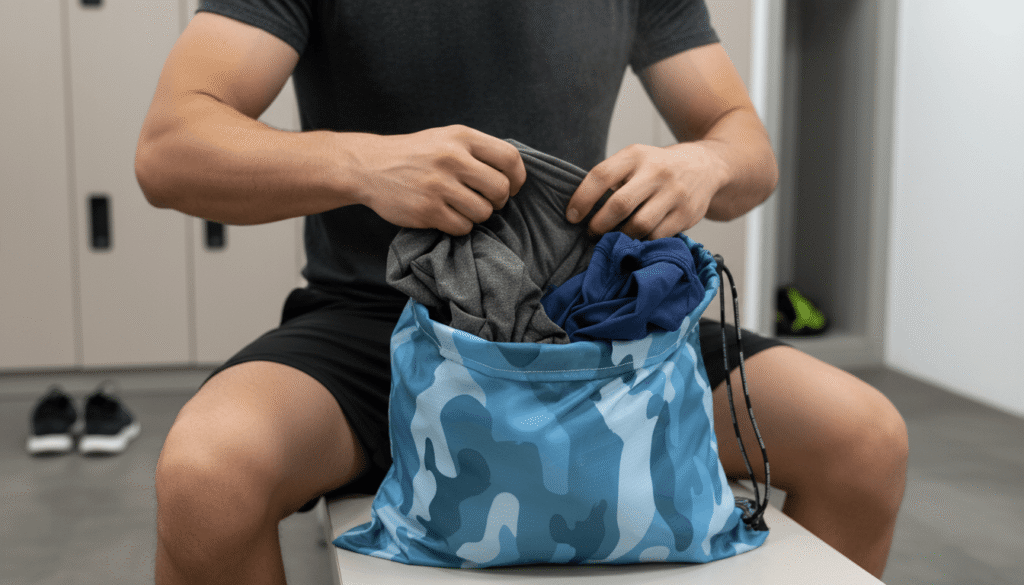
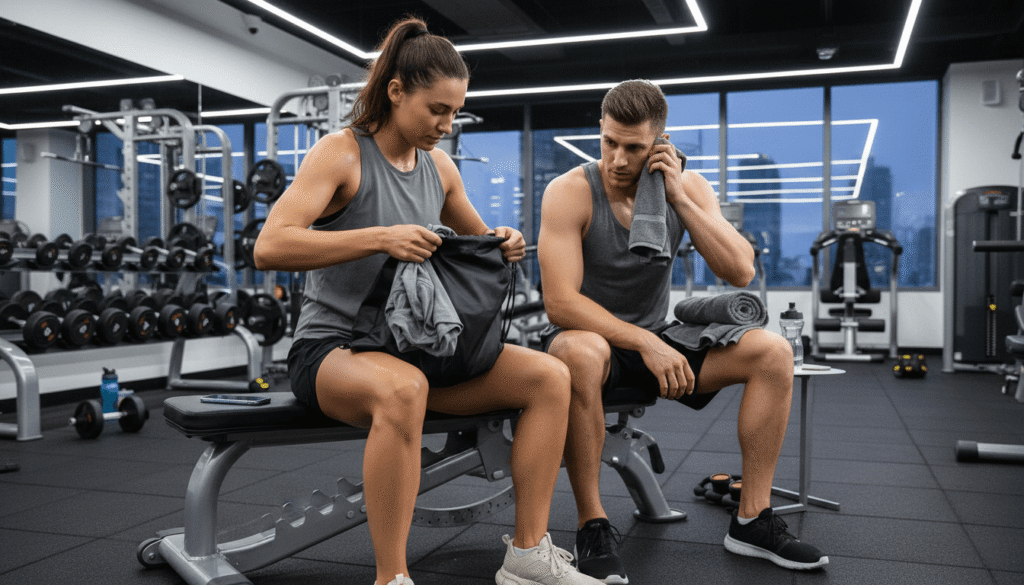
You open your gym bag and that smell hits you. It’s musty, sour, and somehow getting worse every day. You’ve tried airing it out, but nothing works. Here’s the uncomfortable truth about what’s really happening inside your bag.
Your Gym Bag is a Bacteria Breeding Ground
Your gym bag isn’t just carrying clothes—it’s carrying sweat-soaked fabrics, damp towels, worn shoes, and organic matter from your workouts. In Singapore’s tropical climate with 30°C+ temperatures and 80%+ humidity, your gym bag becomes the perfect incubator for bacteria and mold.
When you pack your sweaty gear after a workout, you’re sealing moisture, body oils, and millions of bacteria into an enclosed, dark, warm space. Within hours, these bacteria multiply exponentially.
🦠 What’s Actually Growing in Your Bag
Bacteria feed on the proteins and lipids in your sweat, producing volatile organic compounds (VOCs) that create that distinctive “gym bag smell.” Common culprits include:
- Staphylococcus: Lives on skin and thrives in warm, moist environments
- Micrococci: Breaks down sweat compounds, creating strong odors
- Corynebacteria: Produces particularly pungent compounds
- Mold and mildew: Grows when moisture levels stay high
The Bacterial Timeline: How Fast It Gets Bad
What Happens After Your Workout
0-2 hours:
Fresh sweat doesn’t smell much yet. Bacteria are just starting to colonize damp surfaces in your bag.
2-8 hours:
Bacterial populations explode. The distinctive “gym bag smell” develops as bacteria break down sweat compounds.
8-24 hours:
Bacteria penetrate deep into fabric fibers and the bag’s lining. Odors become embedded and harder to remove.
24+ hours:
Mold and mildew may begin growing. The bag itself becomes a permanent odor source, even when empty.
Why Singapore’s Climate Makes It Worse
Living in Singapore creates unique challenges that make gym bag odor particularly difficult to manage:
- Constant warmth: Bacteria thrive in our year-round 30°C temperatures
- High humidity: Clothes and bags never fully dry out between uses
- No seasonal break: The problem exists 365 days a year
- Indoor storage: Even air-conditioned spaces maintain enough humidity for bacteria
Why Air Fresheners Don’t Actually Work
You’ve probably tried Febreze or other spray deodorizers. They work for a few hours, then the smell returns. Here’s why:
Air fresheners and deodorizing sprays mask odors with stronger fragrances—they don’t eliminate the bacteria causing the smell. Once the fragrance dissipates, the bacteria are still there, happily multiplying and producing more odor compounds.
Worse, many spray deodorizers add moisture to your bag, which can actually accelerate bacterial growth in Singapore’s humid climate.
Immediate Actions You Can Take
While you learn about long-term solutions, here’s what to do right now:
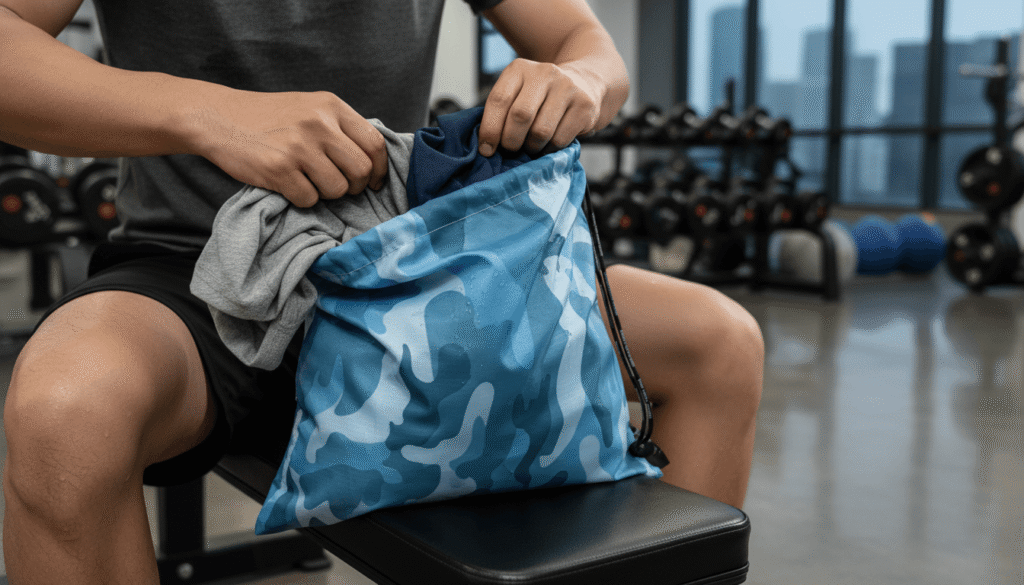
- Use ONE Deodorizer Bag to store your post-workout apparel – This helps to neutralize odor and absorb moisture from sweat
- Air it out completely – Turn deodorizer bag inside out and leave open for at least an hour in a ventilated area
- Recharge your bag monthly – Place deodorizer bag under the sun for at least 1 hour
- NO washing needed – Convenience of using a wet wipe to clean the interior